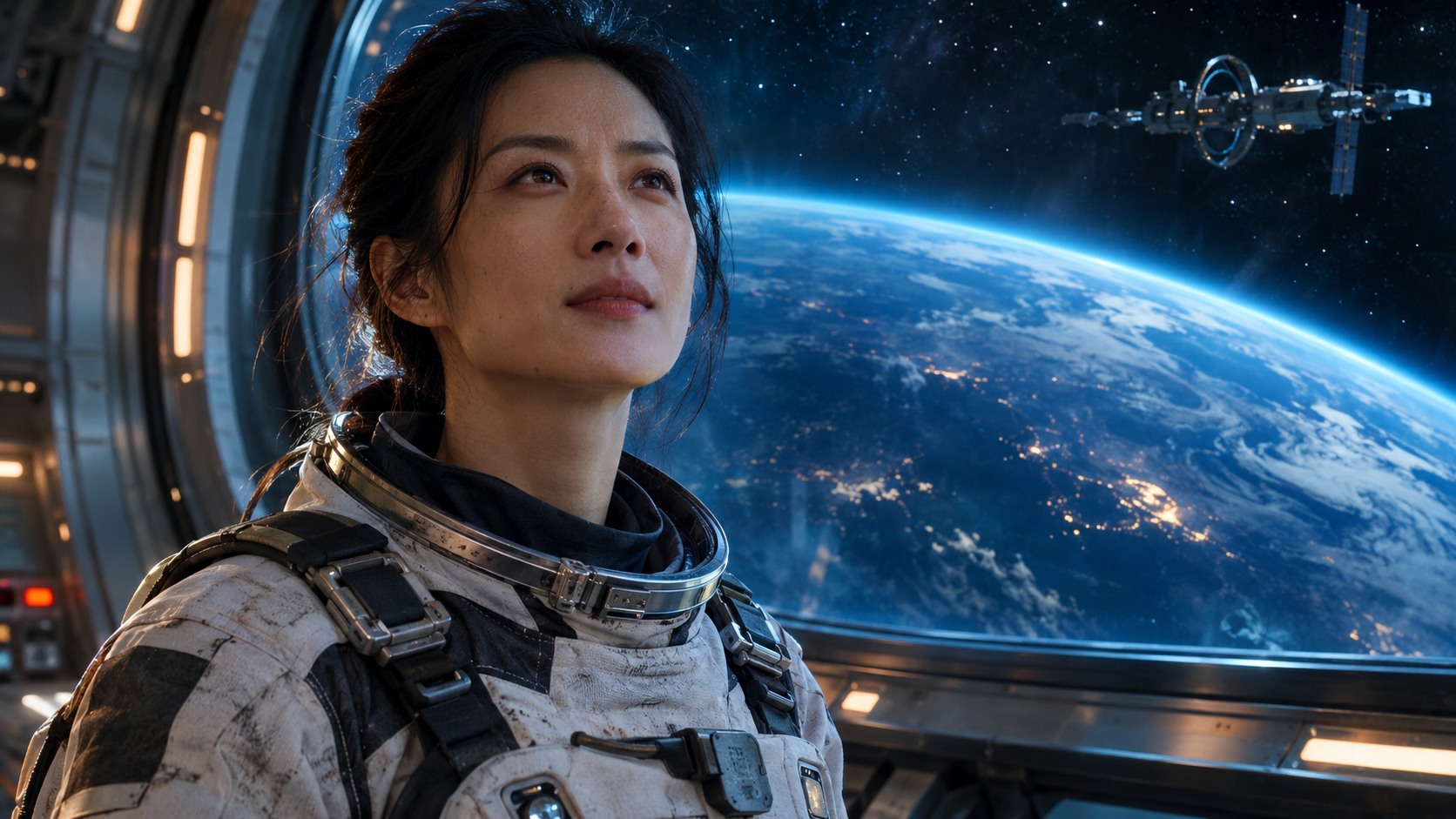
How do movies made by artificial intelligence get from an idea to a finished scene? The answer involves a series of creative decisions. A filmmaker develops the story, designs the characters, generates or shoots footage, and selects the images and sounds that tell the story clearly. Filmmakers in India, African countries such as Senegal, and China are already exploring different versions of this process.
The amount of AI used varies between productions. Some filmmakers use it to develop a screenplay or plan a scene. Others generate much of the imagery and motion. To see independent examples, explore movies made by artificial intelligence on BG Films Plus.
How Movies Made by Artificial Intelligence Begin with a Story
A useful starting point is a scene with a character who wants something and an obstacle in the way. Before generating footage, write down what changes during that scene. Does a detective discover a clue? Does a warrior decide to trust someone? That change gives the shots a purpose.
Next, break the scene into a shot list. A wide shot can establish a location. A closer shot can show someone noticing a detail. A reaction can reveal what that detail means to them. Planning these moments helps you generate footage you can actually edit together.
Designing Consistent Characters for Movies Made by Artificial Intelligence
Character references make it easier to maintain a recognizable appearance across shots. Establish the face, hairstyle, clothing, and important props before asking for movement. Do the same for locations, including the lighting, layout, and time of day.
Review each result against those references. If a coat changes color or a doorway moves, decide whether to regenerate the shot, adjust it, or choose a different angle. Continuity is something the filmmaker has to check throughout the process.
From Still Images to Moving Scenes
With the visual direction established, the filmmaker can create individual clips using text prompts, reference images, or image-to-video tools. A prompt should describe the action and camera movement clearly. One manageable action per shot is often easier to evaluate than a long sequence of complicated events.
Expect to make choices between takes. One clip may have convincing movement but the wrong expression. Another may have the right emotion but a distracting visual error. The task is to find or refine the version that serves the scene.
Dialogue and sound need attention too. Voices should fit the characters, and lip-sync should match the intended performance. Background sound, footsteps, and silence can help establish a place and control tension.
Editing Movies Made by Artificial Intelligence
Editing turns those separate clips into a sequence. Arrange the shots around the action, check the eyelines, and listen to how the dialogue flows across cuts. A clip that looks impressive on its own may slow the scene down or repeat information the audience already understands.
Watch the finished sequence at normal speed. Check whether characters remain recognizable, whether the action is understandable, and whether the sound supports the mood. Revise the shots that interrupt the experience.
Movies Made by Artificial Intelligence in India
Indian filmmakers are exploring AI as a way to bring ambitious stories to the screen. A useful example is Maharaja in Denims, the generative AI adaptation being developed by Intelliflicks from Khushwant Singh’s novel. The studio describes its approach as combining human storytelling with AI production tools and has shared trailers, behind-the-scenes material, and scenes from the project.
The project illustrates why this approach appeals to filmmakers: a story that is difficult to finance through conventional production can be developed with a different visual workflow. The creative team still needs to decide how the characters look, how a scene unfolds, and which generated material belongs in the finished edit. Published scenes are evidence of that work, rather than a reason to assume an announced feature has already completed its release.
Another Indian example is Vivek Anchalia’s Naisha. In a 2025 interview with The Hollywood Reporter India, Anchalia described creating character images, maintaining their appearance in different settings, and revising the film as the technology improved. He also described using human performances and motion capture alongside generated imagery. That is an example of AI filmmaking combining several methods instead of relying on a single prompt.
For creators, the lesson is practical: establish a visual identity, test how it behaves in motion, and keep refining the material. A compelling image becomes part of a movie only when it supports a character, an action, and a sequence.
Movies Made by Artificial Intelligence in Africa
Africa includes many distinct countries, languages, and filmmaking traditions. Senegal offers a concrete example of a filmmaker using AI to tell a locally rooted story. Senegalese director Hussein Dembel Sow’s Thiaroye 44 is identified in its published film description as an AI film retelling the 1944 massacre of Senegalese soldiers who had returned from Europe after fighting for France.
The example matters because AI filmmaking is being used to visualize African history and perspectives. The filmmaker’s stated aim is to create work by Africans and for Africans while reaching a wider audience. The technology supplies another means of building imagery; the choice of subject and viewpoint comes from the storyteller.
Reporting on Sow’s project Rose also described a hybrid approach: filming performers in Dakar and developing AI-assisted visual effects for a story about a girl who imagines fantastical worlds. This shows how a filmmaker can combine a real location and human performance with imagery that would be difficult to create through a small conventional effects budget.
These examples suggest possibilities for historical stories, fantasy, and imaginative short films. They do not mean every African production uses AI, or that the same workflow suits every country. The opportunity is for individual filmmakers to choose the techniques that fit their stories, resources, and cultural context.
Movies Made by Artificial Intelligence in China
China provides an example of AI production moving into a studio feature workflow. Bona Film Group’s Sanxingdui: Future Past is a science-fiction animation inspired by the ancient Sanxingdui civilization. Reporting on the production describes original digital characters and a process in which human creators directed the concept, story, and artistic decisions while AI generated visuals and other production elements.
This approach connects cultural material with an imagined future. Bronze artifacts and archaeological imagery become elements in a science-fiction world, giving the production a specific visual foundation rather than a generic futuristic setting.
The production also demonstrates why a feature requires more than attractive clips. Characters have to remain recognizable across scenes. Locations must feel connected. Action, dialogue, sound, and pacing have to sustain the story over a longer running time. Those are directing and editing problems as much as generation problems.
The broader lesson for independent filmmakers is to treat AI output as material to direct and assemble. A studio pipeline may involve many specialists, while a small team may combine roles, but both need clear decisions about what the audience should see, understand, and feel.
What These Movies Made by Artificial Intelligence Have in Common
Across these examples, filmmakers are finding different ways to combine storytelling and generated media. Some begin with a novel. Others revisit history or blend live-action performances with imagined environments. The shared process involves planning, creating visual references, testing shots, selecting usable material, and editing it into a coherent experience.
AI can widen the range of images a filmmaker can attempt, but each scene still needs a dramatic purpose. Consistent characters, understandable action, believable sound, and emotional pacing are what help an audience follow a movie beyond its first impressive frame.
Watch Movies Made by Artificial Intelligence on BG Films Plus
Watching finished films can help make the process easier to understand. Pick a short sequence and pay attention to its framing, pacing, and sound. Notice what each shot tells you and how the edit moves your attention from one detail to the next.
Explore movies made by artificial intelligence on BG Films Plus, including original stories by Bobby Guions. If you want to develop a project of your own, visit the AI filmmaking course guide for an introduction to the workflow.